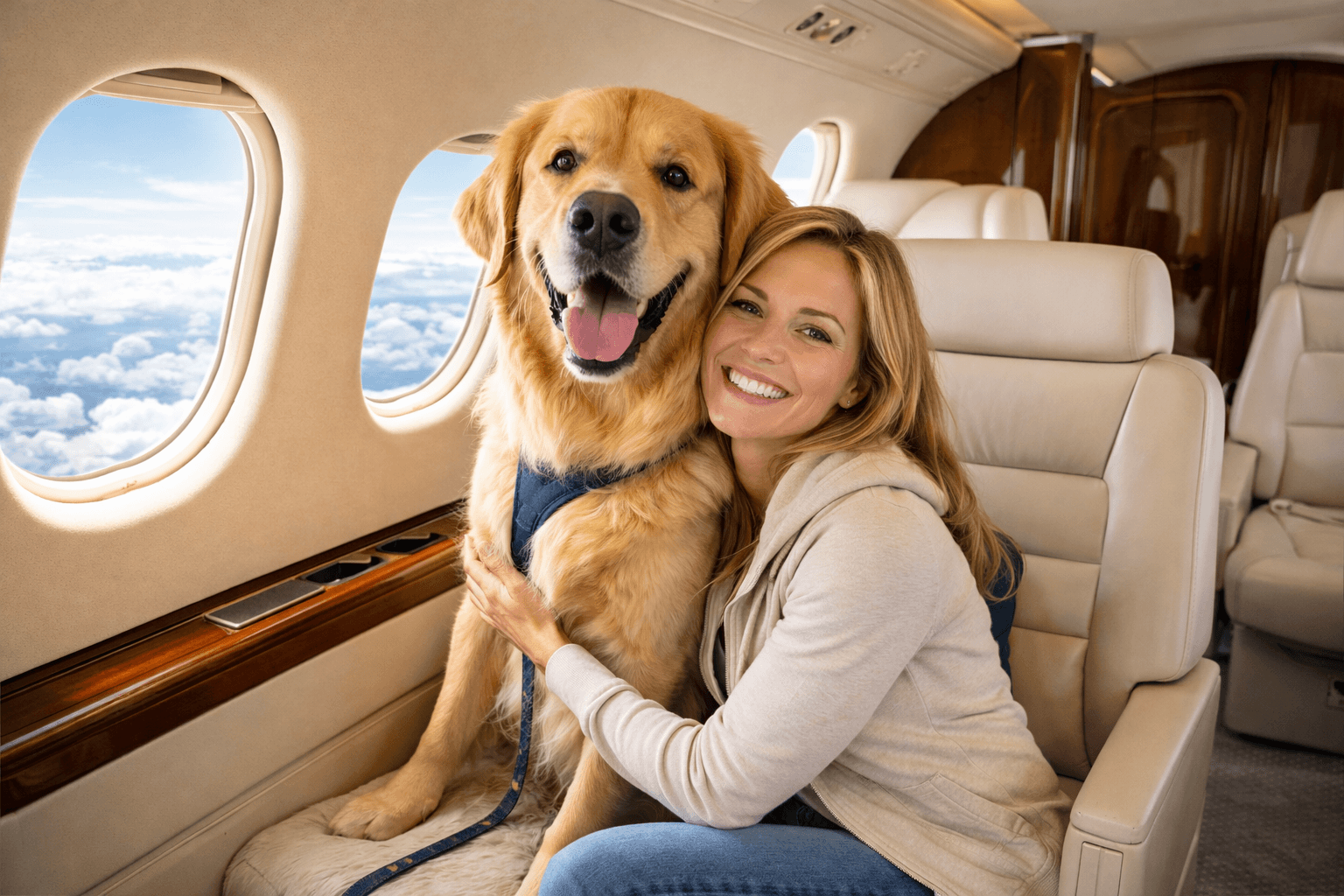
Dogs in Spain: What It’s Really Like to Live & Travel With a Dog
 Marisa Hoskins8 min read
Dogs in Spain are part of daily life but living, traveling, or moving to Spain with a dog isn’t as simple as Instagram makes it look.
If you’re here, you’re probably asking some version of this:
“Can I really live in Spain with my dog and do it without things going wrong?”
That’s a very real question. Spain looks incredibly dog-friendly from the outside. You see dogs on café terraces, strolling through historic cities, riding elevators in apartment buildings, lounging on beaches. And much of that is true.
But there’s an important distinction most people don’t realize until they’re deep into the process:
Spain loves dogs but Spain is not friction-free for dog owners, especially if you’re moving or traveling from another country.
This guide is here to bridge that gap.
Whether you’re:
- traveling from the U.S. to Spain with your dog
- relocating long-term and trying to understand Spanish pet rules
- or simply wondering what daily life with a dog in Spain actually looks like
…I’ll walk you through it clearly, calmly, and honestly grounded in current rules, real-world experience, and the things people most often get wrong.
Is Spain Dog-Friendly? The Honest, Practical Answer
Yes Spain is dog-friendly culturally, but it’s also rule-driven and locally regulated.
Dogs are deeply woven into everyday life here, particularly in cities and coastal areas. That said, Spain operates through a patchwork of municipal bylaws, health regulations, and enforcement practices that can surprise newcomers who expect a more “anything goes” environment.
What genuinely feels dog-friendly
- Dogs are very common in apartments and urban living
- Café and bar terraces are widely dog-friendly
- Veterinary care is high quality and comparatively affordable
- Pet services (walkers, groomers, pet shops, trainers) are easy to find in most cities
Where people are often caught off guard
- Indoor cafés, shops, supermarkets, and malls often do not allow dogs, even if terraces do
- Beaches are dog-friendly only in designated zones or seasons, with fines outside those areas
- Leash laws are actively enforced in cities
- Fines for off-leash dogs or not picking up waste are real and increasingly common
Spain welcomes dogs but expects owners to understand and respect local rules.
Dogs in Spain: What It’s Really Like to Live, Travel, and Move With a Dog
Housing and rentals
Dogs are very common in Spanish homes, including apartments. Many landlords do allow pets, but it’s not universal. In practice, you’ll usually need:
- Written permission in your lease
- A specific pet clause (and sometimes an additional deposit)
Pet acceptance tends to be easier in:
- coastal towns
- expat-heavy neighborhoods
- newer apartment developments
Historic city centers and older buildings can be more restrictive, especially in Madrid and Barcelona.
Cities vs coastal towns vs rural areas
- Major cities (Madrid, Barcelona, Valencia):
Excellent veterinary care and pet services, more rules, stricter enforcement - Coastal towns & islands:
Very dog-friendly culture, seasonal beach restrictions, easier pet-friendly housing - Rural areas:
Dogs are common, but services are limited and attitudes can be more traditional
Public transport (big picture)
Public transport rules vary by city and operator, but broadly:
- Small dogs in carriers are widely accepted
- Larger dogs may be allowed outside peak hours with leash and muzzle
- Buses are usually more restrictive than metros and trains
Always check the official transport authority for your city rules differ and change.
Moving to Spain With a Dog: Legal Requirements (Explained Clearly)
Spain follows EU pet travel law, which is standardized across member states but very specific about sequencing and timing.
Microchip
Your dog must have:
- An ISO-compliant 15-digit microchip
- Implanted before or at the same time as the rabies vaccination used for travel
If the rabies shot is given before the microchip, it’s invalid for EU entry.
Rabies vaccination
- Your dog must be at least 12 weeks old
- For a first rabies vaccination (or if coverage lapsed):
→ 21 full days must pass before entry - On-time boosters do not require a new waiting period
Spain does not allow entry of unvaccinated puppies.
EU Pet Passport vs EU Animal Health Certificate
This is one of the most misunderstood parts of international pet travel.
- Already living in the EU:
→ EU Pet Passport (issued by an EU veterinarian) - Coming from the U.S. or another non-EU country:
→ EU Animal Health Certificate (AHC)
The AHC:
- Must be issued within 10 days of entry
- Is then valid for travel within the EU for up to 4 months
Timing mistakes here are one of the most common, and expensive, errors people make.
Traveling From the U.S. to Spain With a Dog
If you’re traveling from the U.S. to Spain with your dog, the typical path looks like this:
- ISO-compliant microchip
- Rabies vaccination with correct timing
- EU Animal Health Certificate completed by a USDA-accredited veterinarian
- Proper endorsement and formatting
- Airline approval (separate from government rules)
This is where many travelers get tripped up:
Meeting Spain’s entry requirements does not automatically mean your airline will accept your dog.
Airline policies are a completely separate layer.
Flying to Spain With a Dog: Airline Reality
Airlines have their own pet policies, and they are often stricter than Spanish or EU law.
Cabin vs hold vs cargo (general patterns)
- Cabin: small dogs in carriers under airline weight limits
- Hold: medium to large dogs in IATA-compliant crates
- Cargo: large dogs or routes where baggage options aren’t available
Seasonal and breed restrictions
- Summer heat embargoes are common
- Short-nosed (brachycephalic) breeds may be restricted year-round
- Pet spots per flight are limited and must be booked in advance
This is one of the biggest stress points and one of the biggest reasons people seek guidance.
Cats and Other Pets in Spain
Cats follow almost identical entry rules to dogs:
- Same microchip and rabies requirements
- Same EU Pet Passport or Animal Health Certificate process
In practice:
- Airlines are often more flexible with cats in cabin
- Cats may struggle more with frequent moves or noisy urban environments
Other pets (birds, reptiles, small mammals) follow entirely different veterinary and customs rules and always need species-specific checks.
Breed Rules, Insurance, and “PPP” Dogs
Spain does not ban dog breeds from entry, but certain breeds are regulated once you live there under “Potentially Dangerous Dog” (PPP) rules.
Depending on region, this can include:
- Local licensing
- Mandatory liability insurance
- Muzzle and short lead in public
- Registration with the town hall
This area is actively evolving, and requirements vary by municipality. Always check with the ayuntamiento where you’ll live.
Common Mistakes I See Over and Over Again
- Getting the rabies vaccine too late
- Issuing the AHC outside the 10-day window
- Confusing airline rules with government rules
- Flying via an EU hub without realizing checks happen there
- Assuming “dog-friendly” means “dogs allowed everywhere”
These mistakes are stressful, expensive, and completely avoidable with planning.
How Paws Abroad Can Help (When You Want Support)
Some people DIY successfully. Others want peace of mind.
At Paws Abroad, we help with:
- Pet-friendly flight planning
- Airline-specific rule checks
- Health certificate timing support
- Pet-friendly accommodation planning
- FORA travel advisor perks and planning for dog-friendly stays
- Concierge support when routes or rules get complicated
If you want clarity without second-guessing, this is exactly what our membership and concierge support are built for.
Build your personalized pet travel plan →
Moving to Spain Long-Term? Visa Help Matters Too
If you’re relocating, not just visiting, visa planning matters just as much as pet paperwork.
We partner with Reloca Spain, specialists in Spanish visas and relocation support.
If you need help with:
- Digital nomad visas
- Residency pathways
- Long-term relocation planning
They’re a trusted resource alongside your pet travel planning.
Final Thoughts
Spain can be an incredible place to live with a dog and many people do it successfully every year.
The difference between a smooth experience and a stressful one usually comes down to:
planning, timing, and knowing which rules actually matter.
If there’s one thing I hope this guide gives you, it’s confidence and the reassurance that you don’t have to figure this out alone.
FAQs
Is Spain dog-friendly?
Yes, culturally Spain is very dog-friendly, especially in cities and coastal areas. However, dogs are subject to leash laws, access restrictions, and municipal regulations that vary by location.
Can I take my dog to Spain from the U.S.?
Yes. Dogs entering Spain from the U.S. must have an ISO microchip, a valid rabies vaccination, and an EU Animal Health Certificate issued within 10 days of entry.
How long does it take to move a dog to Spain?
For dogs with an up-to-date rabies vaccine, planning can take a few weeks. For first-time rabies vaccinations or high-risk rabies countries, timelines can extend to several months.
Do dogs need quarantine in Spain?
No. Dogs that meet EU entry requirements do not need quarantine.
Are certain dog breeds banned in Spain?
Spain does not ban breeds from entry, but some breeds are regulated locally under PPP rules once resident.
Can dogs fly in cabin to Spain?
Small dogs may fly in cabin depending on airline weight limits and aircraft type. Availability is limited and must be booked in advance.
Is Spain dog-friendly for people traveling or moving with dogs?
Yes dogs in Spain are widely accepted in daily life, especially in cities and coastal areas. However, local rules, leash laws, housing policies, and airline requirements still apply and vary by region.
Other Resources:
International Pet Travel Requirements
Discussion
Join the conversation
Share your experiences or ask questions about this article.