Can I Take My Dog to Portugal? The Complete 2026 Guide
 Marisa Hoskins10 min read
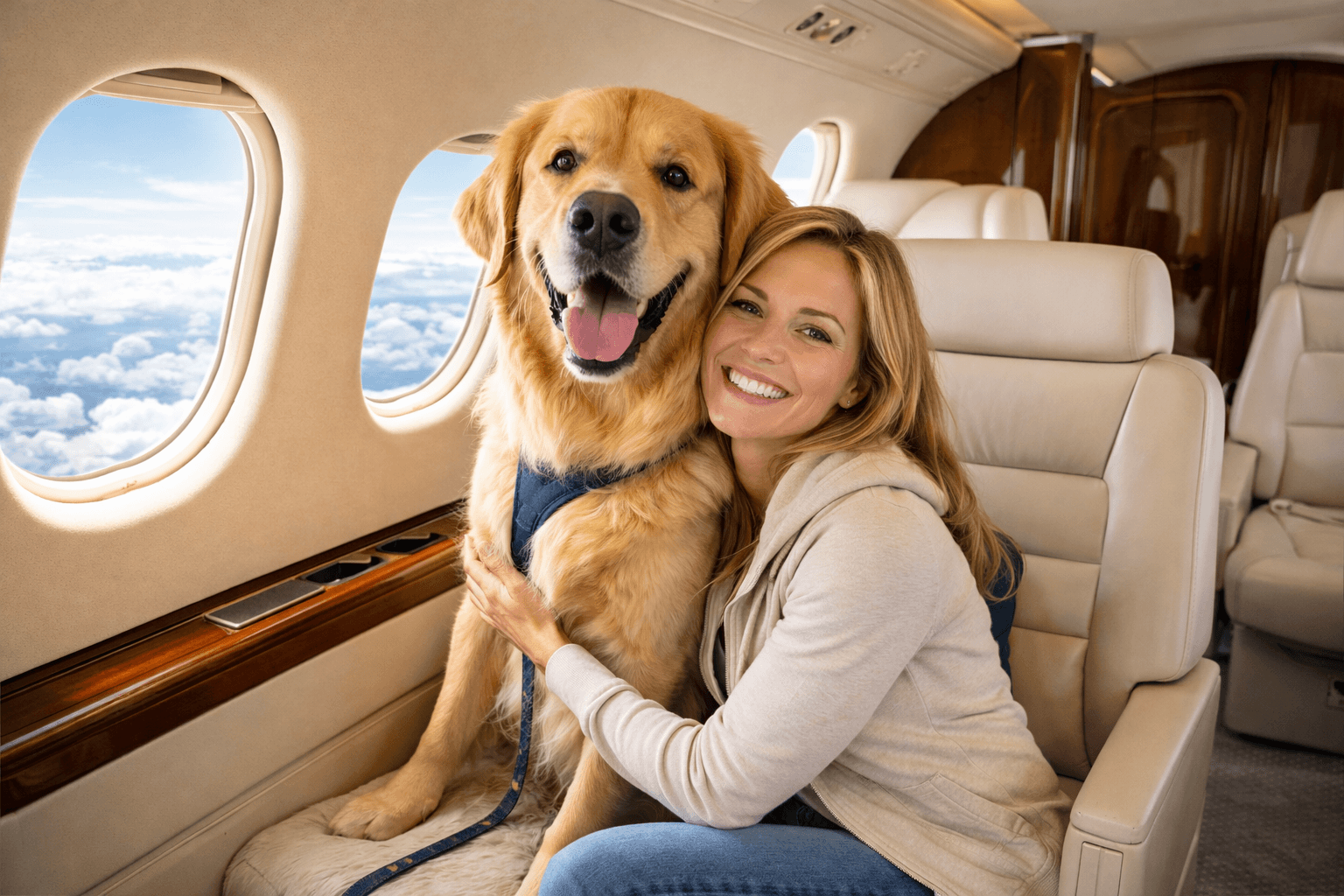
Can I take my dog to Portugal? Yes, and if you do it properly, Portugal can be one of the easiest, happiest EU countries to travel to (or live in) with a dog.
I’m writing this from Lisbon, where my two dogs and I are based. And I’ll be honest: Portugal isn’t just “pet-friendly” on paper…it’s pet-friendly in real life. Dogs are part of the culture here. People smile at your dog. Shop owners hand out treats. You’ll see dogs inside cafés and restaurants (yes, indoors), riding the metro, strolling the city with total confidence.
And one tiny detail that still makes me laugh: Lisbon airport even has a full WC Canino. That’s the vibe.
But like every EU country, Portugal is also rule-based when it comes to entry. If you’re stressed, it’s usually not because Portugal is hard it’s because people mix up:
- EU legal entry rules (microchip, rabies timing, certificates)
- airline rules (weights, carriers, breed restrictions, embargoes)
- Portugal-specific steps (your port of entry process, and what happens when you land)
This guide gives you the full, calm, trustworthy plan whether you’re traveling for a vacation or moving to Portugal with a dog.
If you want the Europe big-picture first, start here:
Can I Take My Dog to Europe Guide
Quick answer: Can I bring my dog to Portugal?
Yes. Most people can bring a dog to Portugal without quarantine if they meet EU rules:
- ISO microchip (implanted before the rabies vaccine used for travel)
- Valid rabies vaccination with correct timing
- Correct health certificate paperwork for your country of departure
- Airline approval (this is separate from government rules)
If you want help turning your route + timeline into something you can actually trust, that’s exactly what we do at Paws Abroad:
- Paws Abroad Membership
- Paws Abroad Concierge(complex routes, bigger dogs, summer travel, multi-step trips)
Is Portugal dog-friendly?
Yes culturally and practically. Portugal is one of those places where dogs aren’t treated like an inconvenience. They’re treated like… dogs. Part of life.
Dogs in cafés, restaurants, and public spaces
Portugal changed its rules in recent years, and dogs are now legally allowed inside many establishments, but there’s still an important real-life nuance:
- Outdoor terraces are almost always welcoming.
- Indoors is usually fine in Lisbon/Porto and expat-heavy areas, but it can still be at the discretion of the owner/staff.
My real-world rule in Portugal:
If you’re going inside, ask first. A simple “É possível com o cão?” keeps it easy and friendly.
And if you’re planning full days that include trains + meals + sightseeing, a loose plan for dog-friendly stops makes the whole day feel relaxed instead of reactive.
If you want help mapping that out realistically (including pet-friendly stays that are actually comfortable, not just “pets allowed” in name only) Paws Abroad offers access to our Fora travel network through:
Dog beaches in Portugal
This is where people get surprised.
- Off-season (roughly Oct–May): many beaches are relaxed about dogs.
- Peak season (roughly Jun–Sep): some monitored/supervised beaches restrict dogs, and rules can be stricter in tourist-heavy areas (especially parts of the Algarve).
- Dedicated dog-friendly beaches exist, and the list evolves year to year.
Because beach rules are often set locally, the smartest move is: check the posted signage and municipal beach rules for the exact beach you want that week.
Portugal pet entry requirements (EU rules, made simple)
Portugal follows EU-wide pet travel rules under Regulation (EU) 576/2013 for non-commercial movement (dogs/cats/ferrets).
1) Microchip requirements (ISO)
- Your dog needs an ISO 11784/11785 compliant 15-digit microchip
- The microchip must be implanted before the rabies vaccine used for travel
- If your dog has a non-ISO chip, you may need to bring a compatible scanner or get an ISO chip
2) Rabies vaccination rules
- Dog must be at least 12 weeks old at rabies vaccination
- If it’s a primary rabies vaccination, you must wait at least 21 days before entering the EU
- If it’s a booster given within validity, there’s typically no new 21-day wait but you need proof there was no lapse
3) Minimum age
Because of the rabies timing, most dogs must be about 15 weeks old minimum to enter Portugal under standard rules.
4) Listed vs unlisted countries (titer test or not)
- Listed countries (like the USA, Canada, UK, etc.) typically do not require a rabies titer test for EU entry
- Unlisted countries require a rabies antibody titer test (≥0.5 IU/ml) + a 3-month wait after the blood draw
Bringing a dog to Portugal from the USA (USDA pet travel to Portugal)
If you’re Googling “USDA pet travel to Portugal” or “Portugal pet entry requirements from the USA,” here’s the clean path:
- Confirm the microchip is ISO and readable
- Confirm rabies timing is correct (and not lapsed)
- Get the EU Health Certificate (Annex IV) completed by a USDA-accredited veterinarian
- Get the certificate endorsed by USDA APHIS
- Travel with the original endorsed documents
Official source:
- USDA APHIS pet travel to Portugal (official):
Timing pitfall to avoid: the EU paperwork has strict windows. Start earlier than you think, especially during summer when endorsement processing and vet appointments get busy.
For more information on the cost of a health certificate for international pet travel check out our guide:
Check out our How to Move A Dog From The USA to Portugal Guide for a more detailed overview.
Bringing a dog to Portugal from Canada (CFIA)
Canada is also generally treated as a “listed” country under EU rules (meaning no titer test for standard pet travel).
The steps are similar to the USA, with one key difference:
- Your certificate needs CFIA endorsement before the animal leaves Canada.
Official source:
Bringing a dog to Portugal from the UK (post-Brexit)
UK travelers typically need an Animal Health Certificate (AHC) for each trip to the EU.
What this usually means:
- microchip + rabies (with correct timing)
- AHC issued by an Official Vet within the required window
- new AHC for each trip (unless rules change in the future)
Official source:
Portugal-specific arrival steps
Portugal entry is EU-based, but your arrival experience depends on the airport/entry point and whether you’re arriving cabin/hold/cargo.
In practice, what many travelers experience:
- documents checked at the airline counter before boarding
- on arrival, you may have to follow port-of-entry instructions for any veterinary controls that apply to your arrival type
Important: if your route connects through another EU country first (example: Frankfurt, Amsterdam, Paris), your pet’s documents are often inspected at that first EU entry point, not “when you finally reach Portugal.”
This is one reason Paws Abroad exists to catch the little route-dependent risks that cause the most stress.
Flying to Portugal with a dog (cabin vs hold vs cargo) + costs
Even if your dog is legally allowed into Portugal, airlines can still say no based on:
- carrier size/type
- weight limits
- limited pet slots per flight
- route/aircraft restrictions
- seasonal heat embargoes
- breed restrictions (especially brachycephalic dogs)
Typical Cost of flying a dog to Portugal
Your real costs usually break down into:
- airline pet fee (each direction / sometimes each segment)
- carrier or IATA crate
- vet exam + paperwork
- endorsement fees (USDA/CFIA, if applicable)
- optional cargo/freight fees for large dogs
Living in Portugal with a dog long-term (registration + EU pet passport)
If you’re moving to Portugal with a dog, your planning doesn’t end at arrival. You’ll want to think about:
- finding a local vet (Lisbon has fantastic care, and in my experience it’s often more affordable than North America)
- registering your dog if you’re staying long-term
- getting an EU pet passport once established (so future EU travel is easier)
Portugal’s companion animal registry is SIAC, and long-term residents typically handle registration through a SIAC-accredited vet, plus any local licensing steps that apply.
Official sources (external):
Are pitbulls allowed in Portugal? (PPP breeds)
This is a big one, and the answer is usually: yes, but with stricter rules.
Portugal has a list of PPP (potentially dangerous) breeds, and dogs on this list (or dogs classified as dangerous due to behavior) may require:
- special licensing
- liability insurance
- strict leash length + muzzle rules in public
- additional compliance steps depending on municipality
Also important: PPP breeds are often restricted on public transport.
Rabies in Portugal (status + why vaccines still matter)
Portugal is widely cited as rabies-free in terms of endemic canine rabies, but here’s the key point for travelers:
Even if a country is rabies-free, EU entry rules still require rabies vaccination for pet movement.
So yes rabies paperwork still matters.
Common mistakes that cause denial or delays
These are the big ones we see over and over:
- microchip implanted after rabies vaccine (invalid for EU travel)
- primary rabies vaccine done too late (21-day wait not complete)
- rabies coverage lapsed (resets the “primary” clock)
- wrong certificate type (non-commercial vs commercial)
- wrong date format on EU forms (EU commonly uses dd/mm/yyyy)
- missing owner declaration/signature
- airline pet slot not reserved (limited spots)
- assuming “Portugal rules” = “airline rules” (they don’t)
Timeline planner (work backwards from your flight date)
Here’s a simple planning timeline that keeps you out of trouble:
8–6 weeks before travel
- confirm microchip + rabies status
- if rabies is primary or there was a lapse, start the vaccine timeline now
- shortlist airlines/routes that actually work for your dog’s size/breed
4–3 weeks before travel
- book your vet appointment for paperwork
- confirm airline pet reservation + carrier requirements
- plan your arrival logistics (especially if connecting through another EU country)
10 days before arrival (common window)
- finalize the EU health certificate within the correct timing window for your origin country rules
- complete endorsement steps (USDA/CFIA where applicable)
- print and organize originals + backups
48–24 hours before
- reconfirm airline notes in booking
- pack carrier essentials + printed documents
- build a calm arrival plan (especially if your dog is anxious)
FAQs
Can I take my dog to Portugal?
Yes. Most travelers can bring a dog to Portugal without quarantine if they meet EU entry requirements (ISO microchip, rabies vaccination with correct timing, and the correct health certificate or EU pet passport), plus airline approval.
What do I need to travel to Portugal with a dog?
In general: ISO microchip (implanted before rabies shot used for travel), proof of rabies vaccination, and either an EU Pet Passport (if EU-issued) or an EU Health Certificate (if arriving from a non-EU country), plus airline compliance.
What are Portugal pet entry requirements from the USA?
Most travelers need an EU Health Certificate completed by a USDA-accredited vet and endorsed by USDA APHIS, alongside ISO microchip + valid rabies vaccination with correct timing.
Is Portugal dog-friendly?
Yes especially in Lisbon and Porto. Dogs are commonly welcome on terraces, and many places allow dogs inside, though indoor entry can still be at the discretion of the establishment.
Are pitbulls allowed in Portugal?
Generally yes, but pit bulls and other PPP breeds are subject to stricter rules (licensing, muzzle/leash rules, insurance). Requirements can vary by municipality, so verify with DGAV and local authorities.
Do I need to see a vet after arriving in Portugal?
If you’re staying long-term, you’ll likely want a local vet for registration steps and ongoing care. For entry, follow the instructions for your port of entry and your route (especially if you connect through another EU country first).
A calm final note (and how we can help)
Portugal can be an incredible place to travel with pets and it can also be the kind of trip that falls apart because of one tiny paperwork timing error or one airline policy you didn’t know existed.
That’s why Paws Abroad exists.
We help you get it right the first time with a clear plan, correct documents, airline-aware routing, and real-world travel advice from people who actually live this.
For a detailed overview of international pet travel check out our main International Pet Travel Hub.
Discussion
Join the conversation
Share your experiences or ask questions about this article.