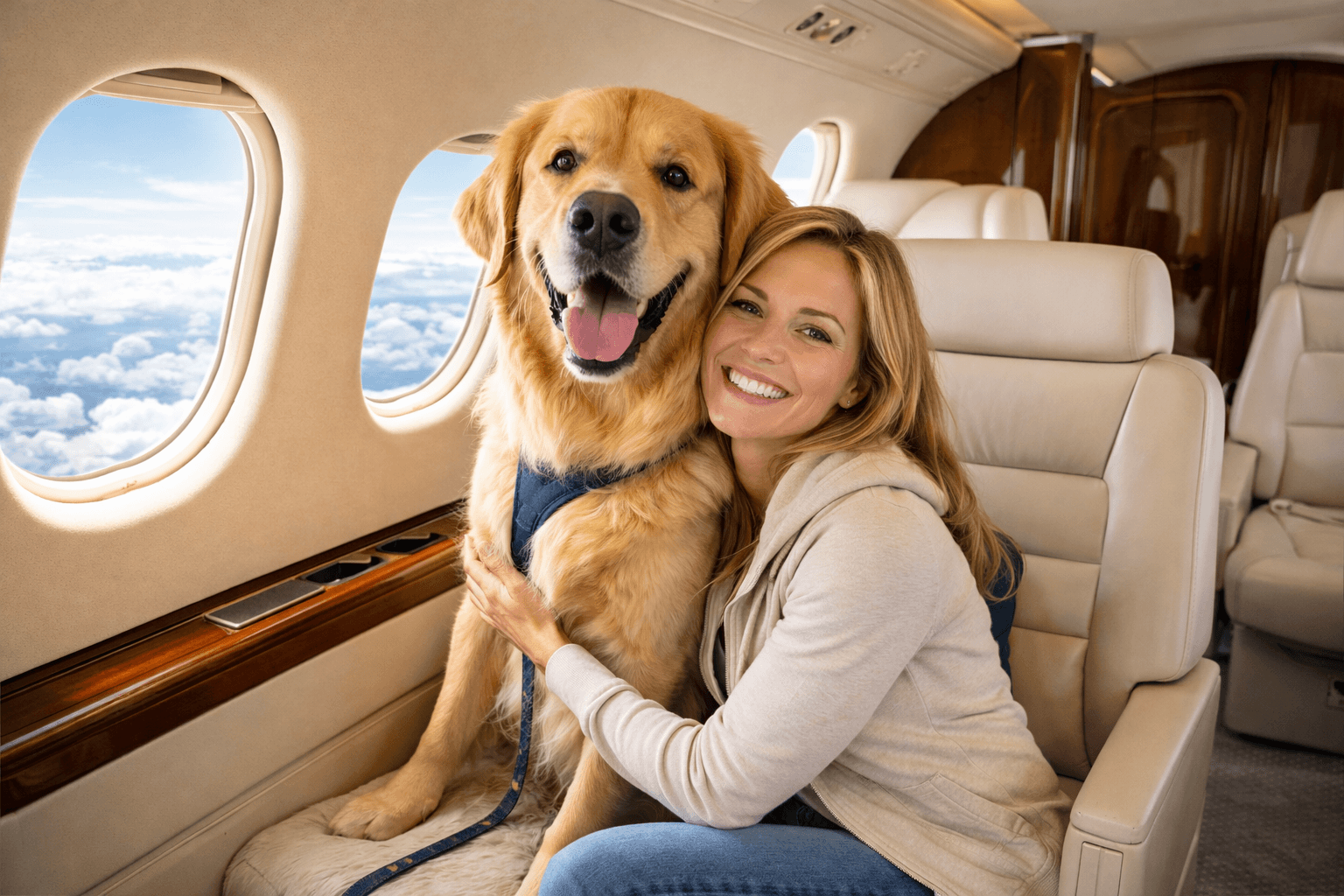
Can I Take My Dog to Europe? The Definitive 2026 Guide for USA, UK, and Canada
 Marisa Hoskins12 min read
If you’re asking “Can I take my dog to Europe?” the answer is yes most of the time.
But successful dog travel to Europe in 2026 comes down to getting two separate systems right:
- EU entry rules (microchip, rabies timing, health certificate)
- Airline rules (carrier size, pet caps per flight, route restrictions, breed/temperature policies)
Even experienced travelers get tripped up because they assume airline approval equals legal entry. It doesn’t. And perfect paperwork doesn’t guarantee an airline will accept your pet on a specific aircraft or route.
This guide gives you a clear, factual, 2026-ready framework for traveling from the USA, the UK, or Canada to Europe with your dog plus the real-world airline considerations that determine whether your plan is actually doable. This guide applies to non-commercial dog travel (traveling with your own dog, not selling or rehoming).
Before booking flights, it’s worth reviewing the International Pet Travel Requirements Hub to understand how EU rules and airline policies intersect. There will also be changes to EU pet travel rules in April 2026 for a detailed breakdown on changes to regulations check out the new 2026 EU pet travel rules
If you are planning to bring your dog to Spain be sure to check out our Dogs In Spain guide. If you are wondering about bringing your pup to Portugal check out our Can I Take My Dog To Portugal guide.
For a detailed breakdown of the EU Animal Health Certificate read this guide.
Can I Take My Dog to Europe in 2026?
Yes, you can take your dog to Europe from the USA, UK, or Canada if your dog meets EU entry requirements. In most cases, that means: an ISO-compliant microchip (implanted before the rabies vaccine), a valid rabies vaccination, and the correct government-backed health certificate issued within 10 days of arrival in the EU. Some destinations also require tapeworm treatment within 24–120 hours before arrival.
The Universal Checklist for Taking a Dog to Europe (2026)
Most dog travel to Europe falls under “non-commercial movement,” meaning you’re traveling with your own dog (not selling or transferring ownership).
Here’s the baseline checklist that applies across the USA, UK, and Canada:
- Microchip: ISO 11784/11785 compliant 15-digit microchip
(Or a readable tattoo applied before July 3, 2011, where accepted) - Rabies vaccination: given after microchip, with correct timing
(Primary rabies typically requires a 21-day wait before travel) - Correct health certificate for your departure country
Issued within 10 days of EU arrival (this timing is strict) - Non-commercial declaration (your dog isn’t being sold or rehomed)
- Entry procedures: comply with the entry process at your first EU arrival point
- Tapeworm treatment only if required by the destination
Required for Finland, Ireland, Malta, Norway, and Northern Ireland
Must be done within 24–120 hours before arrival
A quick but critical note: the EU will not treat a rabies vaccine as valid for travel if the microchip was implanted after the vaccine. If your paperwork shows that order, you may need to re-vaccinate and restart the waiting period.
For a breakdown of what life is like in France with a dog check out our Dogs In France guide.
And, if you’re planning to travel to Italy be sure to check out our Dog in Italy guide.
Entry Rules by Departure Country
Taking a Dog to Europe from the USA (2026)
The US is commonly treated as an approved third country for EU pet travel, which means most typical moves do not require a rabies titer test. However, the documentation and endorsement process matters.
What you generally need:
- EU Health Certificate (Non-Commercial Movement)
This is the core travel document for entry. It includes your dog’s microchip number, rabies vaccination details, and health information. - USDA endorsement (APHIS)
In many cases, the certificate must be endorsed by USDA APHIS after your veterinarian completes it. This step is often where timing goes wrong, because the endorsement process can take time and the certificate is only valid for entry within a strict window. - Microchip and rabies timing
Your dog must be microchipped first, then vaccinated for rabies. If your dog was vaccinated before the microchip was implanted (or before the microchip is recorded on the rabies certificate), you may need a new rabies vaccination after microchipping and a fresh waiting period.
Minimum realistic planning timeline (if your dog is already vaccinated and microchipped):
- Within 10 days of EU arrival: vet issues the EU certificate
- Before departure: complete the USDA endorsement step (if required)
- If needed: tapeworm treatment 24–120 hours before arrival
The most common reasons USA travelers run into problems:
- The health certificate is issued too early
- USDA endorsement is missing or delayed
- The rabies vaccine is not clearly tied to the correct microchip number
- The traveler assumes airline approval covers border entry (it doesn’t)
If you are interested in travelling to or visiting Portugal with your dog from the USA, check out our detailed How To Move To Portugal With A Dog From The USA guide.
What Most Pet Parents Miss: Entry Rules vs Airline Rules
Meeting Europe’s entry requirements is only one part of the equation.
Even if your paperwork is perfect, your dog still has to be accepted by the airline on your specific route, aircraft, and travel date. Airline pet policies are separate from government entry rules and they vary widely by:
- airline
- aircraft type
- cabin class
- route (especially transatlantic)
- time of year and temperature restrictions
- your dog’s size and breed
This is where many travelers run into last-minute surprises.
An airline may allow dogs in cabin on one transatlantic route but not another. Some aircraft types don’t have temperature-controlled holds. Others restrict pets entirely during summer months or ban certain breeds from cargo.
Before you book flights, it’s critical to confirm that:
- your dog’s travel method (cabin, hold, or cargo) is actually supported on that route
- the aircraft assigned to your flight allows pets
- there are pet slots available on your travel date
To help with this step, we break down current airline rules, route limitations, and real-world restrictions in detail here:
Airline Pet Policies (2025–2026)
Understanding airline feasibility before booking flights can save you from rebooking fees, denied boarding, or being forced into cargo at the last minute.
Taking a Dog to Europe from the UK (2026)
For most travel from Great Britain to the EU, the practical reality is that you’ll need an Animal Health Certificate (AHC) for each trip unless you already have an EU-issued pet passport for your dog.
Key points UK travelers need to know:
- GB-issued pet passports are not used the same way they were pre-Brexit
Most UK travelers now use an Animal Health Certificate. - Animal Health Certificate (AHC)
Issued by an Official Veterinarian and must be issued within 10 days of EU entry. If your travel date shifts, you can fall outside the validity window and need a new certificate. - Rabies timing still applies
If your dog’s rabies vaccination has lapsed and you need a new primary rabies vaccine, you generally need a waiting period before travel. - Tapeworm treatment depends on destination
Finland, Ireland, Malta, Norway, and Northern Ireland have specific rules and a strict timing window.
UK traveler “gotchas” that matter:
- People book an AHC appointment too early and assume “earlier is safer”
In reality, it can make the certificate expire before arrival. - People don’t plan for the return leg
Returning to Great Britain can have its own tapeworm timing requirements depending on the route.
Because health certificate requirements vary by departure country and travel route, it helps to understand which type of health certificate applies to your trip and how the timing works before you book flights.
→ Health Certificates for International Pet Travel
Taking a Dog to Europe from Canada (2026)
Canada’s flow is similar to the USA in structure: the EU health certificate is completed by a vet and then endorsed through the relevant authority. The key difference is the endorsement body and how appointments/timing are handled.
What you generally need:
- EU Health Certificate (Non-Commercial Movement)
Completed by a licensed veterinarian. - Endorsement process
Plan for the endorsement step before you travel, and build your timing backward from your EU arrival date. - Microchip and rabies sequencing
Microchip first, rabies second, with correct documentation.
Minimum realistic planning timeline (if already vaccinated/microchipped):
- Within 10 days of EU arrival: vet completes certificate
- Before departure: endorsement step completed (if required)
- If needed: tapeworm treatment 24–120 hours before arrival
Not sure whether your dog can actually fly on your chosen route?
Paws Abroad helps you confirm airline feasibility before you book flights.
Flying with a Dog to Europe: Cabin vs Hold vs Cargo (Realistic Planning)
This is where most plans fall apart: not because of paperwork, but because the chosen flight can’t actually accommodate the dog.
There are three broad travel categories:
- In-cabin
This is typically only possible for small dogs that fit in an under-seat carrier. Space is limited per flight and must be reserved in advance. - In the hold as checked baggage
Availability depends on airline, aircraft type, route, season, and breed. Many airlines restrict or prohibit brachycephalic breeds in the hold for safety reasons. - Manifest cargo
Sometimes required for large dogs, route-restricted journeys, or when the airline does not allow pets as checked baggage on that itinerary.
The key point: airline pet policies are not static “brand rules.” They can change based on the exact route, the aircraft assigned, and even the season. That’s why generic advice often fails.
Airline pet policies vary widely by route, aircraft type, and destination, and they often change with little notice. Checking airline rules early can help you understand whether your dog can travel in cabin, in the hold, or will need an alternative arrangement.
→ Airline Pet Policies for International Pet Travel
If you want help understanding which flights may be suitable for your specific route and dog, Paws Abroad members receive planning support that includes route-specific flight eligibility guidance.
Common Mistakes That Cause Denied Boarding or Entry
These are the problems that show up again and again:
- Getting the certificate too early
The “10 days” rule is strict and based on EU arrival timing. If you misunderstand what the 10-day window applies to, your documents can be invalid on arrival. - Microchip after rabies vaccine
If rabies vaccination happened before microchip implantation (or isn’t properly documented with the microchip number), it can trigger re-vaccination and a new waiting period. - Assuming airline approval equals legal entry
Airlines control boarding. Border control controls entry. You need both. - Booking flights before verifying pet feasibility
Flights have pet caps, carrier rules, route restrictions, aircraft limits, and seasonal embargoes. Sometimes the flight you picked simply isn’t a workable pet flight. - Tapeworm timing errors
For destinations that require it, the 24–120 hour window is precise. Flight delays and itinerary changes can push you outside it.
FAQs
Can I bring my dog to Europe from the USA?
Yes, as long as you meet EU entry requirements and follow the correct certificate and endorsement timing. The most common issues are certificate timing and endorsement delays.
Can I bring my dog to Europe from the UK?
Yes, but most UK travelers need an Animal Health Certificate issued within 10 days of EU entry. It’s time-sensitive and typically required per trip unless you have an EU-issued pet passport.
Can I take my dog to Europe from Canada?
Yes. The process is similar to the US structure: a vet completes the EU health certificate and the endorsement step is handled by CFIA (Canadian Food Inspection Agency) before travel, with timing built backward from arrival. It is important to call CFIA and book and appointment for the endorsement within 10 days of travel.
Do dogs need quarantine to enter Europe?
In most cases, no if you fully comply with EU requirements. Quarantine tends to be associated with non-compliance scenarios.
Can my dog fly in cabin to Europe?
Sometimes. It depends on your dog’s size, the airline, the specific route, and aircraft. Cabin pet space is limited and must be reserved early.
Paws Abroad: Route-Specific Planning (Without the Guesswork)
International pet travel isn’t hard because the rules are unknown.
It’s hard because they’re layered, time-sensitive, and route-specific — and small mistakes can derail an entire trip.
Paws Abroad helps pet parents turn complex requirements into a clear, step-by-step plan based on their exact situation.
What members get
A personalized travel plan
A clear timeline built around your departure country, destination, and your dog’s current status — so you know exactly what to do and when to do it.
Route-specific flight eligibility guidance
Instead of relying on generic airline policy pages, members can confirm whether a specific route is realistically workable for their dog’s size, breed, and travel category before booking flights.
Travel advisor support (Premium & Concierge)
Premium members receive support from certified travel advisors for planning and booking pet-friendly trips, including routing strategy and pet-friendly accommodations.
Vetted resources & community by location
Access location-based recommendations and vetted resources to reduce uncertainty once you arrive — plus the ability to ask questions and learn from others traveling similar routes.
Private pet-friendly booking support (when needed)
If commercial flights aren’t a safe or realistic option due to size, route restrictions, or breed limitations, we help you explore private pet-friendly options and the right next steps.
Recommended Resources:
Discussion
Join the conversation
Share your experiences or ask questions about this article.